 ES
ES

SAGSE Central America & Caribbean 2026
Electro Sistemas de Panamá to Discuss Technology Integration and Panama’s Role as a Regional Hub at SAGSE Central America & Caribbean 2026
June 3, 2026, at the Sortis Hotel Casino
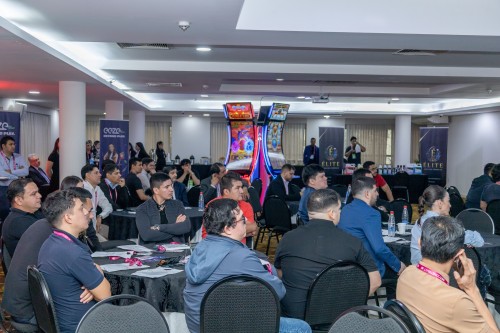
Donato Pirro, Deputy Manager of Electro Sistemas de Panamá, will participate in SAGSE Central America & Caribbean 2026, taking place on June 3 at the Sortis Hotel Casino & Convention Center in Panama City. In this interview, the executive shares his perspective on how technological needs are evolving within casinos and gaming venues, the growing value of integration between platforms and systems, and the strategic importance of Panama as a regional hub for technological innovation in the gaming industry. He also discusses how interoperability, real-time analytics, and regulatory compliance are reshaping investment decisions for operators and suppliers across Latin America.
How are technological needs evolving in casinos and gaming venues?
The evolution is not linear — it happens in layers. Ten years ago, the priority was digitizing processes: table management, access control, machine monitoring. Today, the challenge is different: venues already have systems, but those systems do not communicate with each other. The dominant need in the market now is interoperability.
This is combined with a change in the visitor profile. Today’s player arrives with expectations shaped by top-tier digital experiences — mobile banking, personalized retail, on-demand entertainment. This pushes casinos to respond with real-time infrastructure: floor behavior analytics, dynamic loyalty systems, queue management, and frictionless experiences from entry to cash-out.
The third factor is regulation. Traceability and compliance requirements are driving investment in solutions that were previously optional — transaction encryption, automated auditing, and responsible gaming controls with predictive alerts. Today, these are no longer differentiators; they are operational requirements.
What role does technological integration play today?
It is the core of every investment decision. A modern casino operates with between eight and fifteen simultaneous platforms — casino management systems, POS, access control, video surveillance, fire protection systems, hospitality, loyalty, and payment systems — and the real value lies not in any single one of them individually, but in the layer that connects them.
From our perspective as providers, the most significant change in recent years is that clients no longer evaluate isolated products. They evaluate ecosystems. The question we are asked in every commercial process is no longer, “What does your system do?” but rather, “What does it integrate with, and how quickly?”
This shifts competition toward open APIs, standard protocols such as G2S and SAS in the gaming world, and architectures that allow new modules to be incorporated without replacing the core infrastructure. Integration is no longer a technical feature — it is the central value proposition.
How important is Panama as a regional hub?
Panama meets three conditions that very few markets in Latin America combine simultaneously: physical connectivity, a relatively mature regulatory framework, and a concentration of regional operators headquartered in the country.
This makes it a natural testing ground. When a technology provider wants to test a solution in the Latin American market, Panama is frequently the first deployment — because the regulatory approval cycle is manageable, because there are operators with an appetite for innovation, and because the market size allows for iteration without the scale risks of markets such as Colombia or Mexico.
From the technology supply side, what we see is that the decisions made in Panama City are often replicated in Costa Rica, the Dominican Republic, Peru, and Ecuador between twelve and twenty-four months later. Not because there is centralized leadership, but because the same operator groups are present across all those markets and standardize based on what they have already tested here. That gives Panama a regional influence that goes far beyond its size as an individual market.